A cordless drill that runs for two minutes, cuts out under load or refuses to charge does not automatically need a new battery. Tool battery restoration can be worthwhile when the housing, terminals, protection electronics and charger interface are still sound. The catch is that a power-tool pack is not simply a row of rechargeable cells. It is a managed high-current system, and the wrong repair can turn a useful tool into a safety risk.
For many older tools, a correctly specified rebuild delivers better runtime than the original pack. For newer packs, diagnosis may show that the fault sits in the battery-management system, temperature sensor, terminals or charger rather than the cells themselves. The practical approach is to identify the chemistry, configuration and failure point before buying cells or opening the case.
Tool battery restoration starts with diagnosis
Start with the simple checks. Inspect the pack casing for cracks, melted plastic, corrosion, loose terminals, swelling or a burnt smell. A swollen lithium-ion pack, or one that has been wet, dropped hard, overheated or punctured, is not a restoration candidate. Isolate it in a non-flammable location and take it to an appropriate battery recycling facility.
Next, test the charger and tool with a known-good compatible battery if possible. A dirty terminal, weak charger contact or failed charger can look exactly like a dead pack. Clean dry terminals carefully and check that spring contacts move freely. Do not bridge contacts with wire or foil to force a charge cycle.
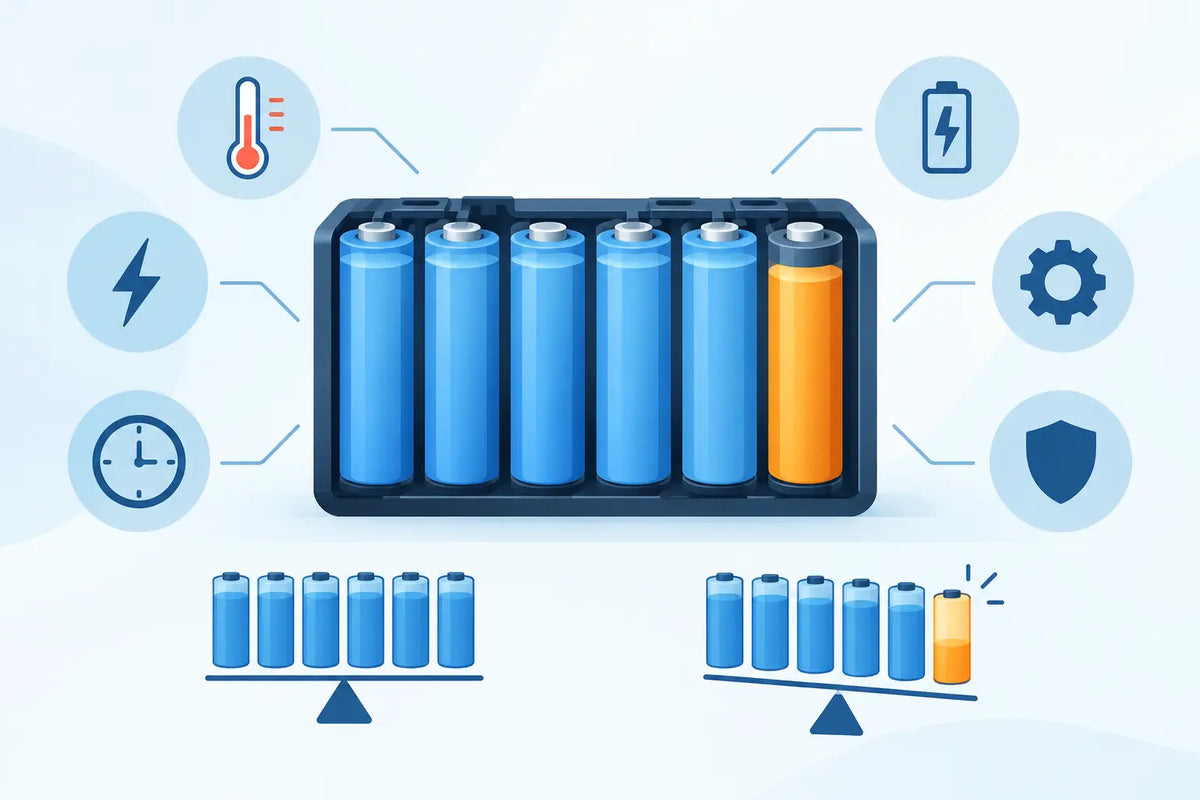
If the pack is safe to open and you have the required skills, record everything before disconnecting any part of it. Photograph the wiring, cell orientation, BMS connections, temperature sensor and terminal layout. Measure total pack voltage, then measure each series group. A single low series group commonly causes a lithium-ion tool pack to shut down early, even when its overall voltage appears plausible.
A useful diagnosis also includes a load test. Voltage measured with no load tells only part of the story. A tired cell group can recover to an acceptable resting voltage, then collapse as soon as the drill, grinder or impact driver demands current. Compare voltage sag between groups where access and safe test methods allow it.
Identify the battery chemistry and pack layout
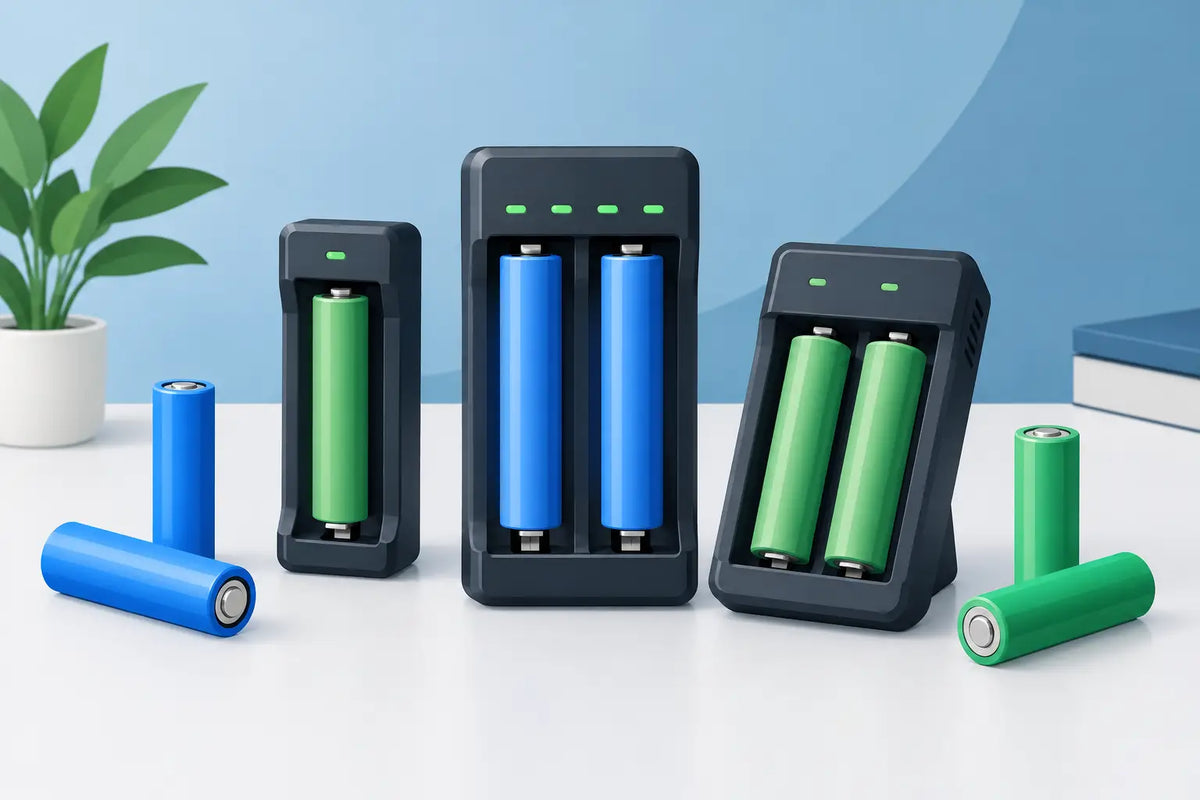
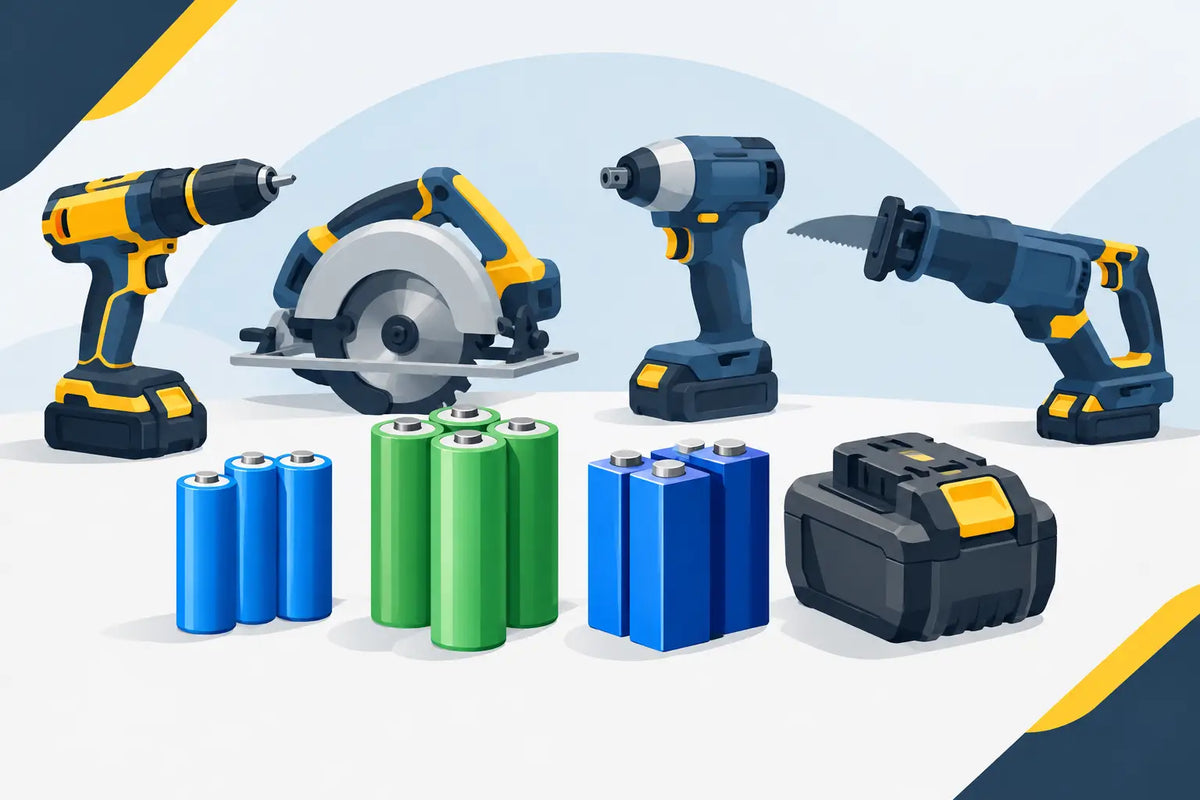
Older cordless tools may use nickel-cadmium or nickel-metal hydride cells. Many current platforms use lithium-ion cells, commonly 18650 or 21700 cylindrical formats. Do not assume that two packs with the same nominal voltage use the same chemistry, physical layout or electronics.
An 18V lithium-ion pack is usually built as five series groups, often described as 5S. Depending on the design, each group may contain one cell or multiple cells in parallel. A 5S2P pack has five groups in series with two matched cells per group. It has the voltage of five cells in series and the capacity and current capability of two cells in parallel.
This layout determines the rebuild. A replacement cell must match the original cell diameter, length, top style and electrical role. It also needs a suitable continuous-discharge rating. A high-capacity 18650 may be an excellent choice for a torch or low-drain device, but it can be unsuitable in a high-current circular saw or grinder. Those tools may require cells designed to supply substantially more current with less voltage sag.
Capacity figures matter, but mAh is not the whole decision. Higher mAh can mean longer runtime, yet a cell with a lower discharge rating may run hot or trigger pack protection in a demanding tool. Choose cells from established manufacturers with published specifications, not rewrapped cells carrying unrealistic capacity claims.
When to replace cells and when to replace the pack
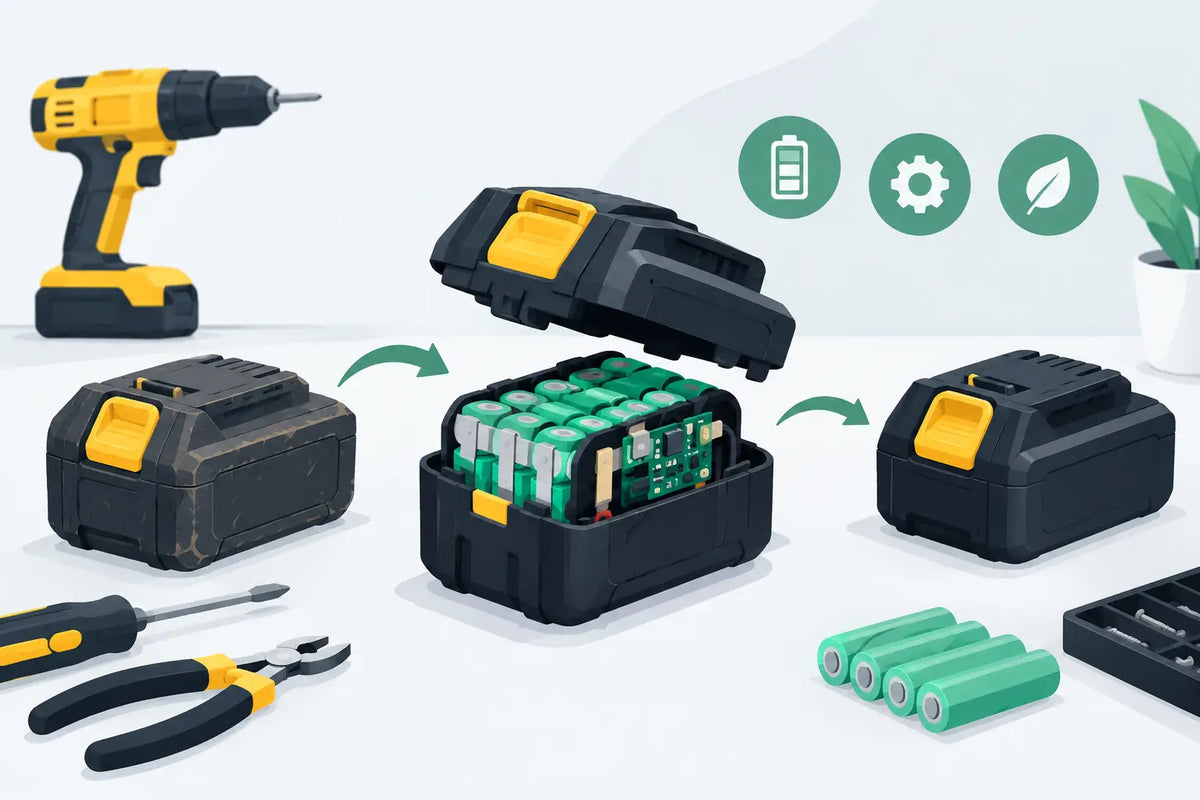
Cell replacement makes sense when the shell is intact, the terminals are sound, the BMS is functional and the original pack design is straightforward to reproduce. It is often most economical for discontinued tool batteries, packs with standard cylindrical cells and packs where one or more groups have clearly lost capacity.
Replacing a complete pack is usually the better call if the BMS is potted, proprietary or visibly heat-damaged. Some modern packs communicate with the tool or charger through extra terminals. They may use a thermistor, identification resistor, fuse link or control board that must remain within expected values. A rebuild can fail even with excellent cells if the electronics have locked out after detecting an abnormal condition.
It also pays to be realistic about labour. If you need cells, a BMS, nickel strip, insulating rings, fish paper, spacers, a spot welder and test equipment for one simple pack, a complete replacement may be better value. For someone already building or repairing packs, those tools are useful long-term equipment rather than a one-off expense.
Never mix old and new cells within a series or parallel group. Do not mix brands, capacities, discharge ratings or cells with unknown history. A weak cell in a series chain limits the entire pack. In a parallel group, mismatched cells can exchange high equalisation current and age unevenly.
Rebuilding a lithium-ion tool pack safely
If the diagnosis supports a rebuild, replace all cells in the pack with identical new cells from the same model and batch where practical. Check each cell's open-circuit voltage before assembly. They should be closely matched. Significant voltage differences are a warning that the cells should not be combined without proper assessment and controlled charging.
Cell interconnects should be spot welded with appropriately sized nickel strip. Soldering directly onto cylindrical lithium-ion cells applies unnecessary heat to the cell and can damage the internal seal or insulation. A proper spot weld is quick and localised. Use genuine nickel strip where current demand is high, as nickel-plated steel has higher resistance and can become a heat point.
Recreate the original pack geometry exactly. Observe polarity at every stage, fit insulating rings to positive terminals, replace fish paper barriers and retain any cell holders or spacers that prevent abrasion. Nickel strip must not contact the cell can where it is not designed to, and sharp edges must be covered. The metal outer can is negative on most cylindrical cells, so a misplaced strip can create a direct short.
Retain the original temperature sensor in its intended position. It is there to monitor cell temperature during charging and discharge. Bypassing it may allow the pack to run or charge without a critical safety input. Similarly, only reuse a BMS if it has been inspected and tested. A BMS is not optional hardware: it manages over-current, over-charge, over-discharge and, in some designs, balancing between series groups.
Before closing the housing, confirm pack voltage, series-group voltage and insulation between live strips and the casing. Then test the pack first on the correct charger under supervision, on a non-flammable surface. Follow with a short tool test at moderate load. Stop immediately if the pack gets unusually hot, smells sharp or chemical, cycles on and off, or the tool loses power abruptly.
Common restoration mistakes that shorten pack life
The most common mistake is choosing by capacity alone. A 5000mAh cell sounds attractive, but a demanding tool can require high continuous discharge performance that a capacity-focused cell cannot safely provide. The correct choice depends on whether the pack runs a drill, hedge trimmer, vacuum, grinder or a lower-current accessory.
Another mistake is reviving cells that have been deeply discharged. A lithium-ion cell below its safe voltage threshold may have internal damage, even if it can be forced to accept some charge. Do not use a bench supply, an improvised lead or a second battery to jump-start a dead cell. Replace suspect cells instead.
Poor mechanical assembly causes plenty of failures too. Loose nickel, pinched balance wires, missing insulation and reused damaged cell wrappers can all lead to intermittent faults or shorts. A pack that works on the bench but fails when clipped into a vibrating tool has not been successfully restored.
Finally, do not assume every branded battery housing is a suitable DIY project. Tamper-resistant cases, welded bus bars, integrated electronics and high-power configurations can make some packs better suited to professional repair or complete replacement.
For makers rebuilding standard cylindrical-cell packs, TinkerTech AU stocks the cells and pack-building components needed to choose for both capacity and continuous current rather than relying on a label alone.
A restored battery should earn its place back in the tool through measured performance, stable temperatures and reliable charging. If any part of the repair remains uncertain, stop there. A new compatible pack costs less than a damaged tool, and far less than the consequences of an unsafe lithium-ion battery.