A 21700 cell is not simply a bigger 18650. It changes the available capacity, current capability, pack layout, charger fit and, often, the device itself. For anyone weighing up 21700 versus 18650 cells, the right answer starts with physical compatibility - then moves to the real current and runtime your project needs.
Both formats are cylindrical lithium-ion cells commonly used in torches, e-bike packs, power tools, portable power systems and custom battery builds. Both can be excellent choices. The mistake is selecting by mAh alone, or assuming every cell with the same label will perform the same way.
21700 versus 18650: the physical difference
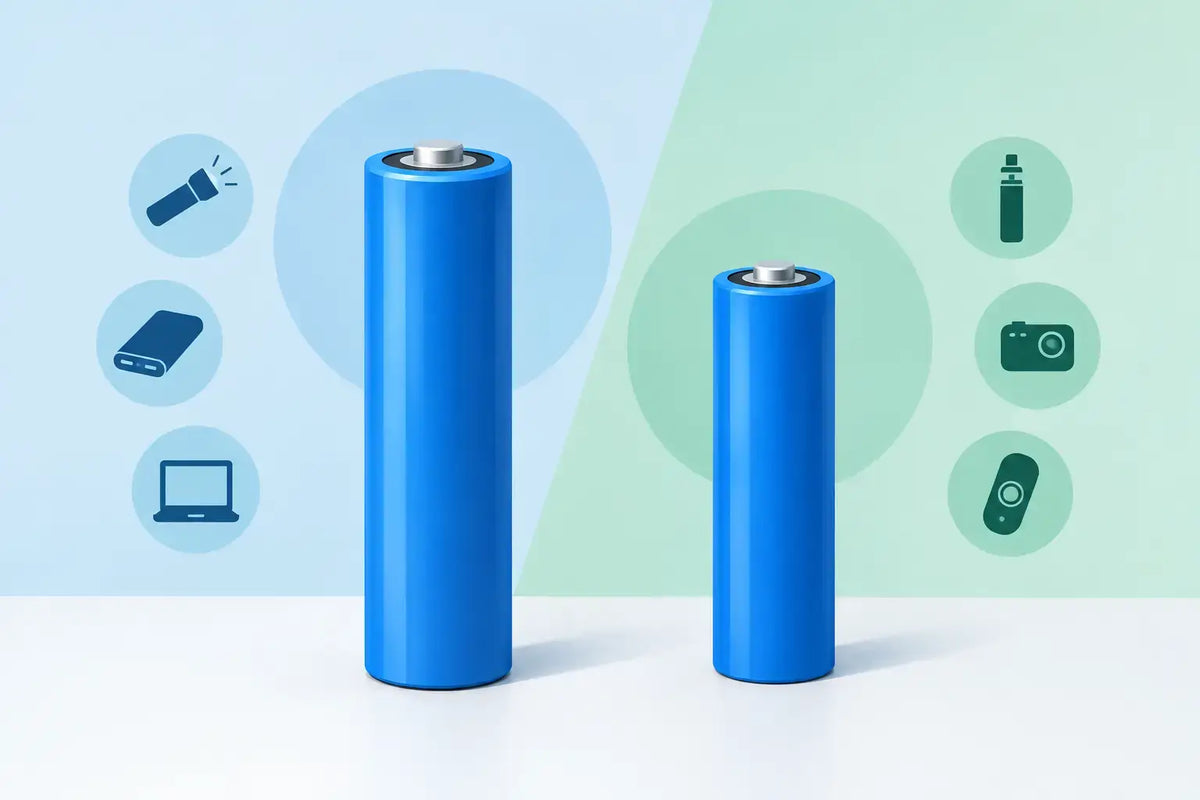
The numbers describe approximate cell dimensions. An 18650 is around 18 mm in diameter and 65 mm long. A 21700 is around 21 mm in diameter and 70 mm long. Those few millimetres matter.
A 21700 has noticeably more volume, which gives manufacturers more room for active material and can support higher capacity, higher continuous discharge current, or a useful balance of both. But a 21700 will not fit an 18650 holder, tube, charger bay or battery sled designed with tight tolerances. Do not force it.
Actual dimensions vary slightly between manufacturers and configurations. A protected cell can be longer than an unprotected equivalent, while button-top cells are longer than flat-top cells. Before replacing a cell in a torch, power tool pack or other enclosed device, check the original format, diameter, length, terminal style and whether a protection circuit is required.
Capacity: where 21700 often has the advantage
For runtime-focused builds, 21700 cells usually offer a clear advantage. Good 18650 cells commonly sit around 2500 mAh to 3500 mAh, while many 21700 cells are available around 4000 mAh to 5000 mAh. Exact figures depend on the chemistry and discharge conditions.
That does not mean a 5000 mAh 21700 always delivers more useful energy than a 3000 mAh 18650 in every application. If the device has a fixed 18650 compartment, the comparison ends there. If you are designing a pack from scratch, you need to consider total watt-hours, voltage, pack dimensions and weight together.
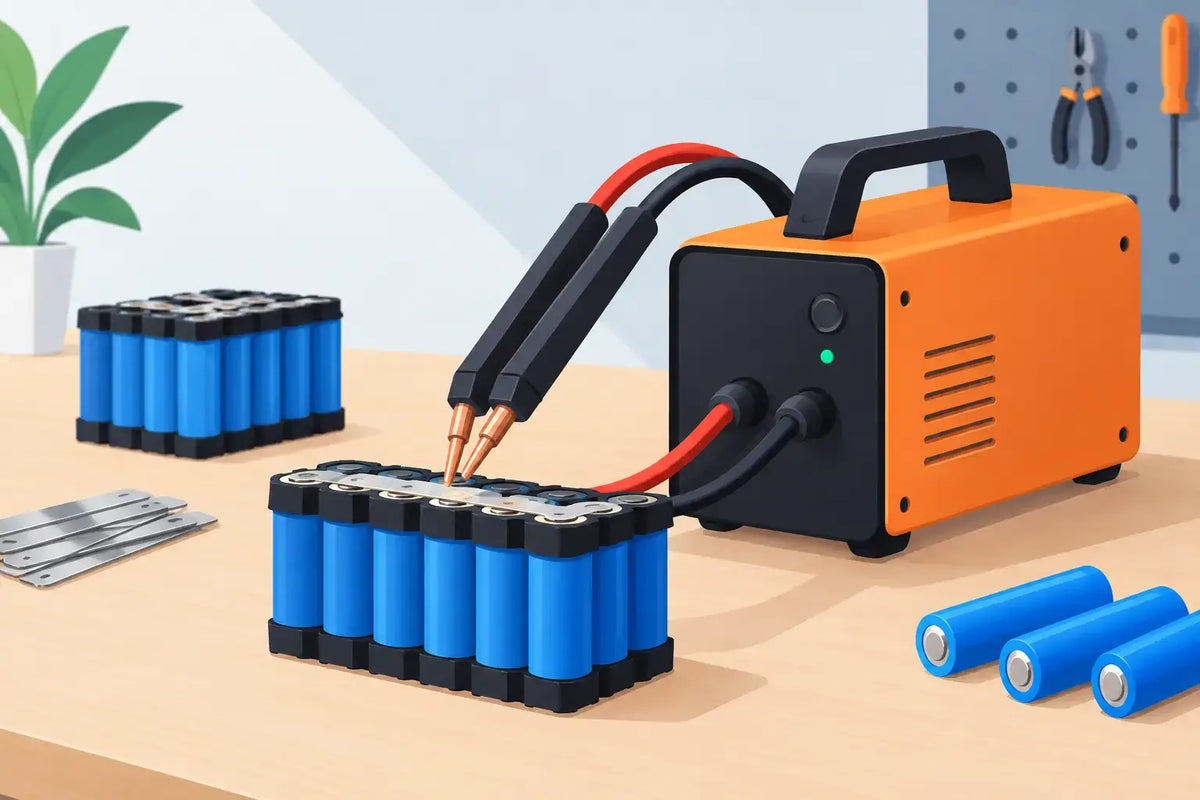
For example, a 10S battery pack built with 21700 cells may achieve a given runtime with fewer parallel cells than an equivalent 18650 pack. That can reduce welding points and simplify pack construction. However, the finished pack may be wider or less suited to a narrow enclosure. An 18650 layout can be easier to arrange in slim battery cases, compact torches and restoration projects where the original dimensions cannot change.
Capacity ratings should also be read alongside the manufacturer’s discharge specification. A cell’s quoted mAh is generally measured at a modest discharge rate. At higher loads, usable capacity falls because of voltage sag and internal resistance. This is why a genuine high-drain cell can outperform a higher-capacity cell in a demanding device.
Discharge current: match the cell to the load
Continuous discharge rating is one of the most useful figures when choosing lithium-ion cells. It indicates the current a cell can supply continuously within the manufacturer’s temperature and voltage limits. It is not the same as a short pulse rating, and it should not be treated as a target to exceed.
An 18650 is available in high-drain versions suitable for many power tools, vaping devices, high-output torches and moderate-performance e-bike packs. A quality 18650 rated around 20A to 35A can be the correct choice where the device is built around that format.
21700 cells can provide even more headroom. Depending on the model, they may combine 4000 mAh or more with a high continuous discharge rating, making them useful for high-demand packs where reduced voltage sag and longer runtime matter. A 5000 mAh 21700 is not automatically a 60A cell, though. Capacity-first and current-first cells are different products, even within the same size.
Work from the actual load. Calculate the maximum continuous current drawn from each parallel group, then divide that figure by the number of cells in parallel. Add sensible headroom rather than choosing a cell that operates at its limit during normal use. The BMS, nickel strip, wiring, connectors and fuse must also be rated for the expected current. A high-discharge cell cannot compensate for undersized pack hardware.
Pack design and energy density
A 21700 can simplify a new build because more energy is stored per cell. Fewer cells may be needed to reach a required watt-hour figure, reducing the number of interconnects and cell-level insulating components. For a large portable power box, e-bike battery or high-output tool pack, that can be a practical benefit.
But fewer cells is not always better. Smaller 18650 cells offer more flexibility in pack geometry. They are widely used, available from established manufacturers in many capacity and discharge combinations, and often suit repair work where a pack must retain its existing shape.
Weight is another trade-off. A single 21700 weighs more than a single 18650, but a 21700-based pack may require fewer cells for the same energy. Compare complete-pack watt-hours and kilograms rather than individual cell weight alone. Also allow for the enclosure, BMS, cell holders, insulation and cabling. Those components affect the finished result more than many first-time builders expect.
Chargers, holders and device compatibility
Compatibility is often the deciding factor between 21700 and 18650. Many modern multi-slot chargers accept both formats, but not every charger bay is wide or long enough for a 21700, particularly a protected or button-top version. Check the charger’s stated supported cell lengths and diameters before buying.
The same rule applies to battery holders. An 18650 holder is not a safe substitute for a 21700 holder, and loose cells should not be improvised into a holder with tape, springs or folded metal. Poor contact increases resistance and heat, while a damaged wrap can create a short circuit against metal parts.
For device replacements, use the format the manufacturer specifies. If a device takes one 18650, installing a 21700 is generally impossible or unsafe. If it takes a 21700, dropping in a smaller 18650 with an adaptor may affect contact pressure, current delivery and low-voltage behaviour. Use only a properly designed adaptor where the device manufacturer permits it.
Flat-top, button-top and protected cells
Format selection does not stop at 18650 or 21700. Terminal type and protection are equally relevant.
Flat-top cells are common in battery packs because they suit spot welding and compact series or parallel layouts. Button-top cells are often required in torches and devices designed for a raised positive terminal. Protected cells include an electronic protection circuit that can help prevent overcharge, over-discharge and over-current, but they are longer and may not fit devices designed for unprotected cells.
For a properly engineered multi-cell pack, the usual approach is matched unprotected cells combined with an appropriate BMS. For simple single-cell consumer devices, a protected button-top cell may be the safer and more compatible option when the device calls for it. Never mix protected and unprotected cells, different capacities, brands, ages or charge states in the same pack.
Choosing the right cell for the job
Choose 18650 when you are replacing an existing 18650, working within a narrow enclosure, rebuilding a compatible pack or using a device with established 18650 requirements. It remains one of the most practical formats available, especially when you need a proven balance of capacity, cost and pack-layout flexibility.
Choose 21700 when you are designing around the larger format and need more runtime per cell, stronger high-drain performance, or fewer cells for a specified energy target. It is particularly useful where the enclosure can accommodate it and the rest of the system is designed for the increased current capability.
Whichever format you select, buy genuine matched cells with a clearly stated capacity and continuous discharge rating. TinkerTech AU stocks 18650 and 21700 options for capacity-focused and high-drain applications, alongside the chargers, BMS units and pack-building supplies needed to use them correctly.
Start with the device dimensions and current draw, not the largest mAh number on the label. That one check usually makes the right format clear before a single cell goes into your build.