A compact spot welder can turn a tidy battery-pack build into a frustrating exercise very quickly. In this compact battery welder review, the key question is not whether a unit can make a spark on thin strip. It is whether it can make repeatable, low-resistance welds on the nickel thickness your pack requires, without heating the cell or leaving weak tabs that fail under load.
For 18650 and 21700 pack builders, compact welders are appealing because they take up little bench space, cost less than transformer-based workshop machines and can be used close to the job. Some contain an internal lithium battery; others draw from an external high-discharge battery or a suitable power supply. Their limits matter just as much as their convenience.
What a compact battery welder needs to do
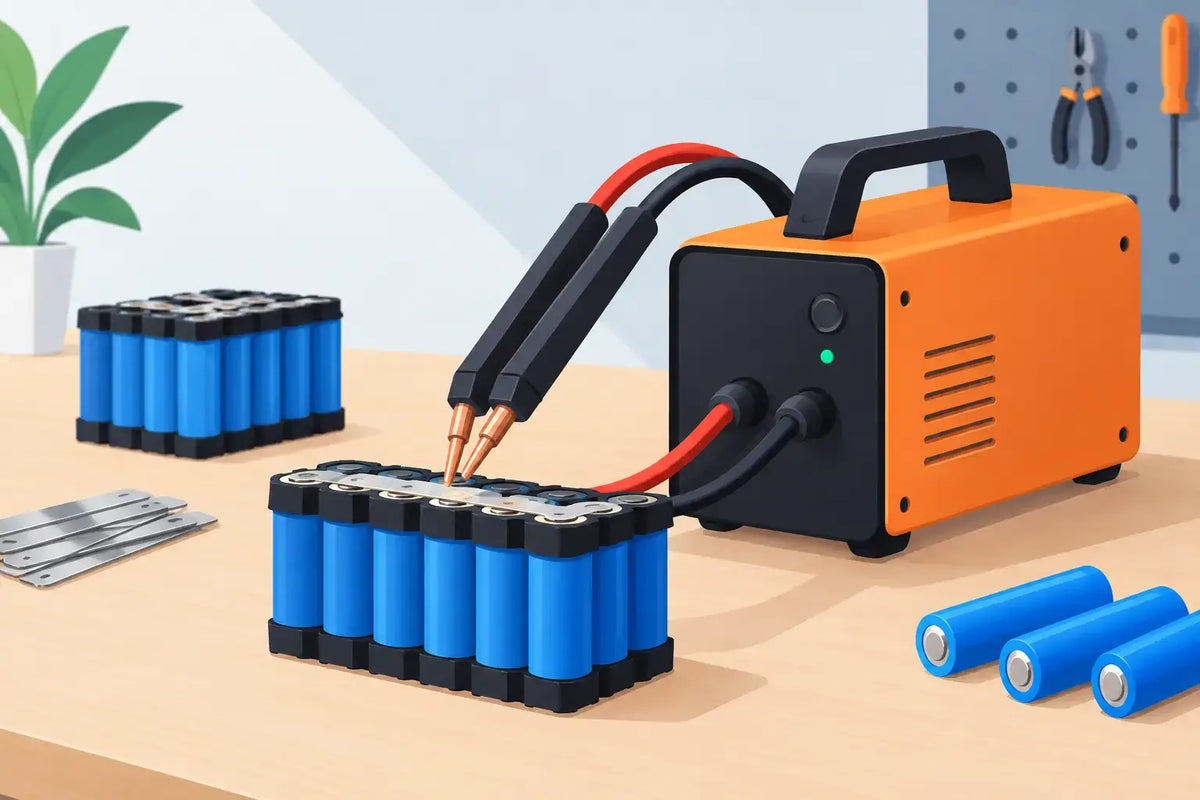
A spot welder joins nickel strip to a cell terminal with two very short, high-current pulses. The electrodes concentrate energy in a small area, fusing the strip to the terminal without carrying heat through the cell in the way soldering can. That is the right approach for most cylindrical lithium-ion pack work.
A useful compact welder must deliver enough energy for the material at hand, then do it consistently. A machine that works on 0.10 mm nickel but struggles with 0.15 mm strip is not necessarily poor value. It simply needs to be matched to a low-current, light-duty build. Problems start when claimed capability is treated as proven capability.
For many hobby packs, 0.10 mm to 0.15 mm pure nickel is the practical range. Higher-current designs may use wider strip, multiple layers, thicker nickel or copper-nickel construction. Those jobs demand substantially more from the welder. A pocket-sized unit may be convenient, but convenience does not replace available welding current.
Compact battery welder review: the checks that matter
Real welding performance, not the display setting
Most portable welders offer numbered power levels. Those numbers are useful only within that specific model. Level 5 on one machine is not comparable with level 5 on another, and an advertised peak-current figure says little without pulse duration, electrode condition and power-source details.
Assess a welder using test welds on the exact strip intended for the pack. Weld a short piece to a discarded cell terminal or a purpose-made test surface, then perform a controlled peel test with pliers. The nickel should tear or leave visible weld marks before it lifts cleanly. If it peels away with little effort, increase the setting carefully, improve electrode contact or reconsider the strip thickness.
Avoid testing repeatedly on a live cell merely to find the maximum setting. Excessive pulse energy can blow holes through strip, mark the terminal deeply and create unnecessary heat. A sound weld is small, clean and mechanically secure, not dramatic.
Pulse control and repeatability
Dual-pulse operation is worthwhile. The first pulse can clean through surface oxidation and improve contact; the second completes the weld. It is especially useful when working with nickel strip that has light contamination or cells with less-than-perfect terminal surfaces.
The best compact units allow sensible adjustment of pulse strength or timing and produce the same result across a run of welds. A unit with a single fixed output may still suit simple repairs, but it gives less room to move between 0.10 mm nickel, 0.15 mm nickel and different electrode pressures.
Automatic triggering can speed up production, while foot-pedal triggering gives better control when positioning awkward pack layouts. For a beginner, a pedal is often safer because both probes can be placed firmly before the pulse is fired. Whichever trigger system is used, it should not activate from a loose probe touch or an accidental bump on the bench.
The power source is part of the welder
An external-battery spot welder is only as capable as the battery feeding it. Thin leads, poor connectors, a tired starter battery or undersized lithium cells can cause weak and inconsistent welds. The display may turn on normally while the unit still lacks the short-burst current needed at the electrodes.
Integrated battery welders remove some setup complexity, but they need charging, storage and realistic expectations. Their internal cells and interconnects have limits. If a compact unit is intended for occasional 0.10 mm nickel work, do not expect it to replace a mains-powered machine on a large 21700 e-bike pack.
For external lithium power, use cells and pack construction designed for high discharge. Capacity alone is not the specification that matters. A 5000 mAh cell with a modest continuous-discharge rating may be excellent for a long-runtime pack yet unsuitable as a high-current source. Low-resistance wiring, secure terminations and an appropriately rated BMS are equally important.
Electrode leads and probe quality
Probe leads should be short, flexible and securely terminated. Long, light leads increase resistance and steal energy before it reaches the weld. Copper probe tips should sit squarely on the strip, remain clean and have enough insulation behind the working end to reduce the chance of accidental shorts.
Hand probes are versatile for flat cell groups and repairs. Fixed electrodes can be faster for repeated, uniform work, but they are less forgiving of unusual pack shapes. Replaceable tips are a practical advantage because tips gradually pit, flatten and collect residue with use.
Match the welder to the pack you are building
A compact welder is a sensible choice for occasional repairs, torch packs, power-tool rebuilds, small battery storage modules and low-to-moderate current DIY projects. It is also useful for learning proper nickel-strip placement before committing to more expensive equipment.
It is less suitable when the job involves many hundreds of welds, thick copper conductors, busbars or consistently heavy strip. Large e-bike, scooter and high-current inverter packs can require a machine with more reserve, better thermal management and a proven capability on the chosen materials. Buying a small welder for a large build can become false economy if every weld needs rework or repeated testing.
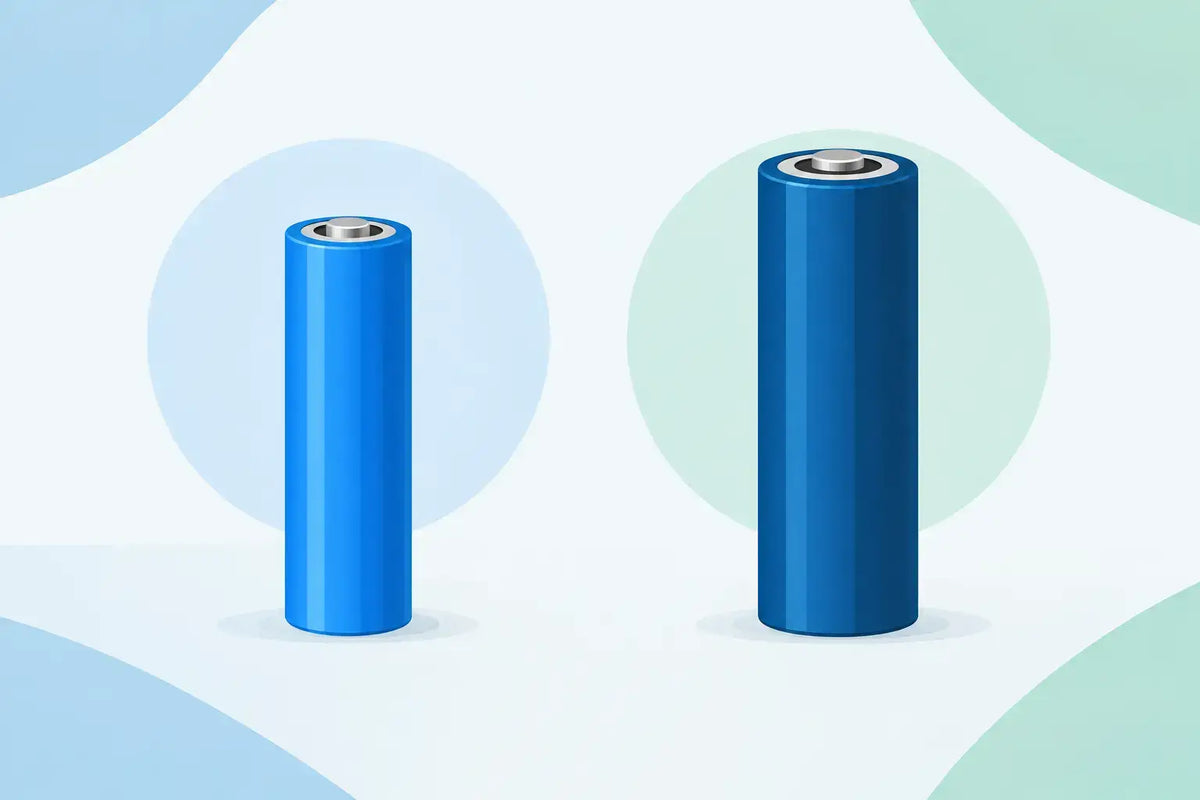
Cell format also influences the layout rather than the weld principle. An 18650 terminal offers less working area than a 21700, so accurate probe placement matters. Button-top, protected and unusual terminal configurations are generally not suitable for conventional pack welding unless the specific design allows it. Build packs from correctly specified, matched bare cells, rather than trying to weld across protection circuits or unknown assemblies.
Strip choice can make or break the result
Use pure nickel where current handling and corrosion resistance matter. Nickel-plated steel is cheaper and can look similar, but it has higher resistance and is often a poor choice for demanding packs. A magnet is a quick initial check: pure nickel is not strongly magnetic, whereas steel is. It is not a complete material verification method, but it can prevent an obvious mistake.
Choose strip width and thickness according to pack current, cell configuration and conductor length. Do not compensate for inadequate strip by turning the welder to maximum. A parallel cell group still needs an interconnect that can safely carry its share of the load, and every weld adds contact resistance if it is poorly formed.
Before welding, clean the work surface, remove oils from strip, fit positive-terminal insulator rings and plan the series connections. Fish paper, cell holders, spacers and suitable insulation are not cosmetic extras. They help prevent shorts created by vibration, sharp strip edges or a damaged wrap.
Safety and workflow on the bench
Spot welding creates intense current, hot metal and occasional sparks. Work on a non-flammable surface, keep loose nickel off the bench and remove rings, watches and other conductive jewellery. Keep a suitable fire response plan nearby and do not work around damaged, swollen or overheated cells.
Build one stage at a time. Check cell voltage before grouping cells, ensure cells are matched by chemistry and condition, then confirm series polarity before making the final interconnects. Install the BMS according to its wiring order and verify pack voltage with a multimeter before connecting a charger or load.
A compact welder should save time, not encourage shortcuts. Test welds, inspect every connection and stop if the machine, leads or cells become unusually hot. For Australian makers assembling lithium-ion packs at home, the best unit is the one that delivers clean welds for the intended nickel strip and current requirement, with enough control to repeat the result confidently.