
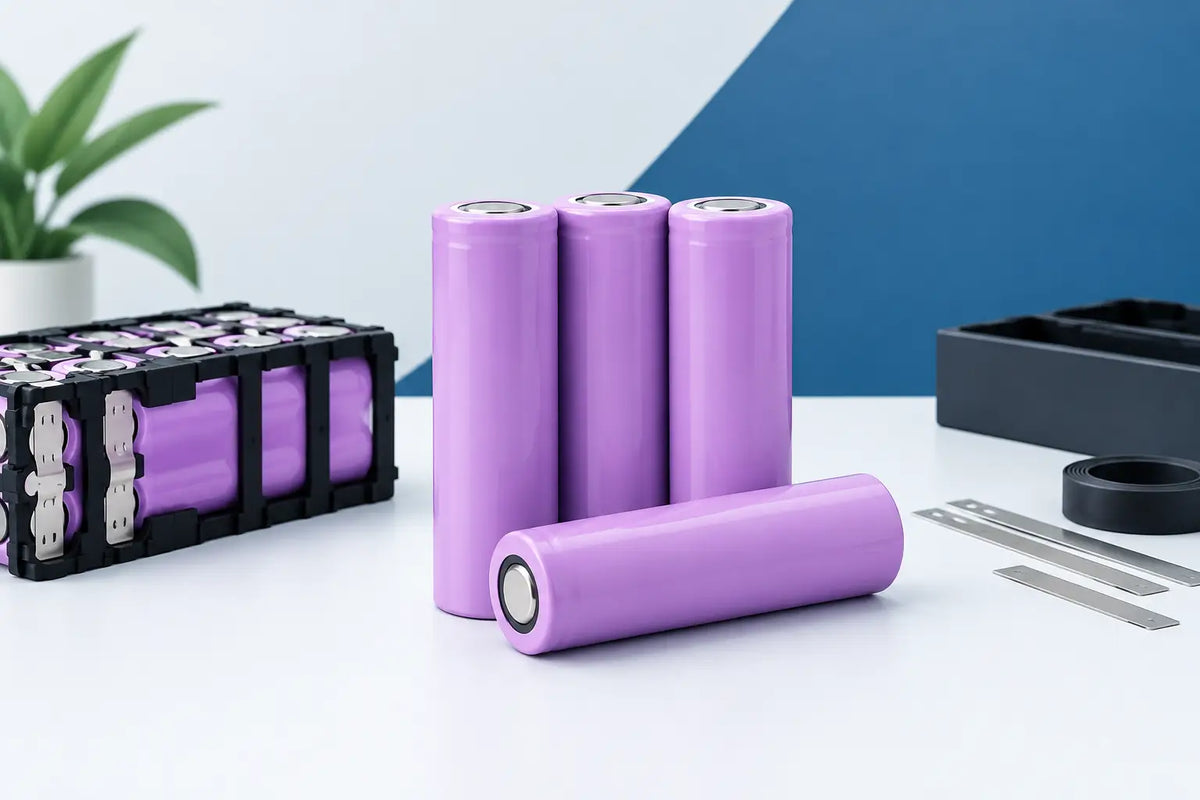
A battery marked 3000mAh can look like the obvious choice for any 18650 job. With the Samsung 30Q, that capacity comes with useful current capability too, which is why it remains a familiar cell for torches, portable power, e-bike packs and other builds that sit between low-drain storage and extreme high-drain demand.
The key is not treating it as a universal replacement. A genuine INR18650-30Q is a quality all-round 18650 cell, but cell selection still comes down to the continuous current, physical configuration, pack design and protection requirements of the equipment in front of you.
What the Samsung 30Q is designed to do
The Samsung 30Q is an 18650-format lithium-ion rechargeable cell with a nominal capacity of 3000mAh. Its chemistry is commonly described as INR, and its standard nominal voltage is 3.6V. Fully charged, it reaches 4.2V; its voltage falls as the cell discharges.
Its main appeal is balance. A capacity-focused 18650 may offer more runtime but be unsuitable for meaningful current draw. A high-drain cell may handle substantially more current but give up capacity. The 30Q sits in the useful middle ground: enough capacity for respectable runtime, with a commonly quoted continuous-discharge rating of 15A when operated within the manufacturer’s conditions.
That makes it a sound candidate where a device needs more than occasional low current but does not demand the output of a dedicated 25A, 30A or higher-drain cell. Think quality LED torches, moderate-power cordless equipment, portable electronics, replacement battery packs and multi-cell projects designed around sensible current limits.
Capacity and current are not interchangeable
3000mAh tells you how much charge a cell can store under stated test conditions. It does not tell you how much current it can safely deliver. The 15A continuous rating is the more relevant figure for load-heavy applications, although real pack performance is also affected by cell temperature, voltage sag, connection resistance and the BMS.
For example, a 3S2P pack has two cells in parallel at each series level. If the pack load is 20A, each parallel pair shares that load, so each cell is asked to supply about 10A in an ideally balanced pack. That is a more suitable match for 30Q cells than a single-cell arrangement supplying 20A continuously.
Builds should be designed with margin rather than run right at a cell’s published limit. Current spikes, warm weather, enclosed battery compartments and uneven cell ageing can all move a pack away from ideal conditions.
Where a Samsung 30Q makes sense
A Samsung 30Q is particularly useful when runtime matters but the device has a controlled, moderate current draw. In a torch, it can provide a practical blend of run time and output support, provided the torch is designed for an unprotected flat-top 18650 and does not exceed the cell’s current capability.
For battery-pack builders, the cell can work well in packs where the series and parallel arrangement is calculated around the expected load. More parallel cells increase available pack capacity and spread current across cells. That is often a better solution than forcing a single cell or undersized parallel group to handle a heavy load.
It can also suit repairs where the original pack used matching 3000mAh, medium-drain 18650 cells. Matching the original cell specification is more useful than simply fitting the highest-capacity cell available. Check the original pack voltage, cell count, terminal layout, BMS requirements and space inside the housing before ordering replacements.
There are applications where another cell is the better call. High-current e-bike controllers, powerful scooters, demanding power tools and other loads with sustained heavy draw may need a dedicated high-drain 18650 or a 21700 format with greater current capability. Conversely, low-drain storage devices may benefit more from a capacity-first cell than a 30Q.
Samsung 30Q specifications to check before buying
Product listings can look similar, so verify the practical details rather than purchasing on the model name alone. The standard 30Q is generally a flat-top, unprotected 18650 cell. It is approximately 18mm in diameter and 65mm long, but tolerances, wrappers and added protection circuits alter the finished dimensions.
For a replacement in a consumer device, terminal style matters. Some torches and devices require a button-top cell to make reliable contact. A protected 18650 is longer again and may not fit a tight battery tube, even if its label says 3000mAh. Never bridge a gap with magnets, foil or loose metal parts.
For pack building, bare flat-top cells are normally used with correctly sized nickel strip, insulation rings, fish paper and a suitable BMS. Cells should be spot welded, not soldered directly to the cell can. Heat from soldering can damage the internal seal and cell construction, while poor connections create resistance and heat under load.
A sensible pre-purchase check covers the following: whether the device takes an 18650 at all, flat-top or button-top compatibility, expected continuous current, available battery space, and whether the device already has low-voltage and over-current protection. These details prevent most avoidable compatibility problems.
Using 30Q cells in a battery pack
A sound pack begins with identical cells. Do not mix Samsung 30Q cells with different brands, capacities, ages or states of wear in the same series or parallel group. Even cells with the same wrapper can behave differently after extensive use, and a weak cell in a series group can be pushed outside safe limits before the rest of the pack appears flat.
Start with new, genuine cells from a specialist supplier, and keep the group matched. Check open-circuit voltage before assembly. For larger or higher-value packs, capacity and internal-resistance testing adds another useful level of confidence. Arrange cells so nickel paths are short and adequately sized for the intended current, then insulate every positive end and any area where a cell can contact conductive hardware.
The BMS is not optional in a multi-cell lithium-ion pack. It should match the series count and have an appropriate continuous-current rating. It also needs correctly wired balance connections. A BMS provides protection, but it cannot make an undersized cell configuration suitable for a high-current load.
Mechanical protection matters as much as the electrical design. Secure cells against vibration, prevent sharp edges contacting wrappers, and protect pack wiring from pulling or rubbing through. If a cell wrapper is torn, replace the wrap and positive insulator ring before use, or remove the cell from service if there is any doubt about its condition.
Charging and storage practices that protect the cell
Charge Samsung 30Q cells only with a quality lithium-ion charger set up for 4.2V lithium-ion chemistry. For removable single cells, use a charger with independent channels rather than a basic charger that treats every slot as one shared circuit. Place the charger on a non-flammable surface, keep it clear of direct sun and combustible materials, and do not leave charging cells unattended.
A lower charge rate is generally gentler on the cell. Faster charging can be appropriate only when the charger, cell specification and temperature conditions support it. If a cell becomes unusually hot, smells odd, hisses, swells or shows damage, stop using it immediately and place it somewhere non-combustible away from people and property.
For storage, keep cells in individual plastic cases so loose cells cannot touch keys, coins or tools. A short circuit can deliver very high current quickly. Store them in a cool, dry place away from direct heat, and do not leave lithium-ion cells in a hot vehicle or exposed to Adelaide summer sun.
For longer storage, avoid leaving cells fully charged or fully depleted for months. A partial charge is preferable, with a voltage check before returning them to service. Recycle end-of-life or damaged cells through an appropriate battery-recycling service rather than placing them in household rubbish.
Choose the cell around the job
The Samsung 30Q remains popular because its 3000mAh capacity and 15A continuous-discharge capability suit a broad range of properly designed 18650 applications. It is not the biggest-capacity 18650, nor the highest-drain option, and that is exactly the point: it is a balanced cell for builds that genuinely need both usable runtime and moderate current.
Before committing to a pack or replacement, write down the device voltage, continuous load, peak load, required terminal style and available space. That small amount of planning makes it much easier to select the right cell, the right charger and the right protection hardware for a battery build that performs as intended.