
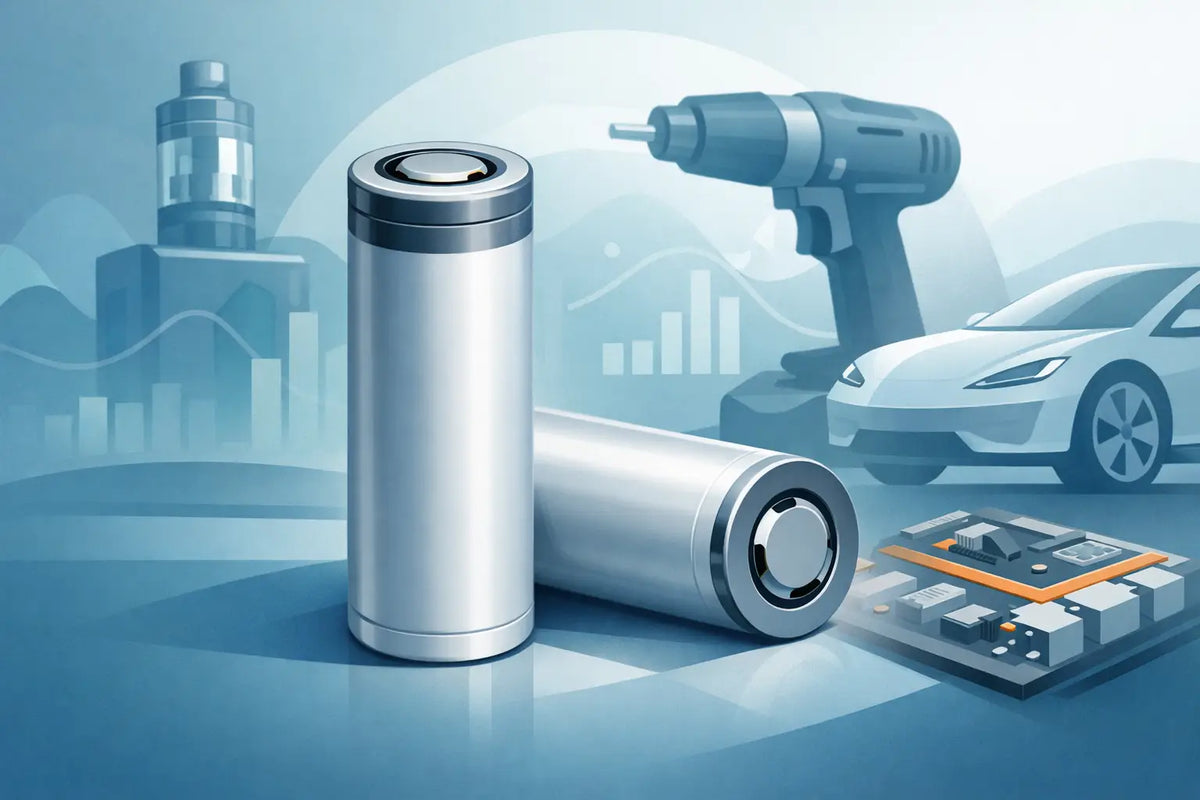
A cell that looks right on paper can still be wrong for the job. Capacity, discharge current, physical dimensions, pack layout and heat all matter. The Molicel P42A earns its place in serious 21700 builds because it offers a useful balance: 4200mAh-class capacity with very high current capability from a genuine, unprotected lithium-ion cell.
For Australian makers, repairers and power users, that balance makes the P42A a strong option when a standard capacity-focused 21700 cell would sag too much under load. It is not automatically the best cell for every torch, e-bike, power bank or battery rebuild. The right choice depends on what the device actually draws, how many cells share that load and whether the finished pack can manage heat safely.
What the Molicel P42A is designed to do
The Molicel P42A is a flat-top 21700 rechargeable lithium-ion cell intended for high-drain applications. Its nominal capacity sits around 4200mAh, while its discharge performance is the reason most builders choose it. Compared with a high-capacity cell designed mainly for long runtimes at lighter loads, the P42A is better suited to equipment that demands strong bursts or sustained current.
In practical terms, that can include performance torches, cordless-tool battery repairs, compact e-mobility packs, high-output portable power projects and other applications where voltage stability under load matters. A cell with insufficient discharge capability can run hot, experience noticeable voltage sag and reach low-voltage cut-off earlier than expected. More advertised mAh does not fix that problem.
The P42A is an unprotected cell. It does not include an added protection circuit at the positive end, and it should not be treated like a ready-to-use button-top battery. Protection must come from the host device or from a correctly specified battery management system, commonly called a BMS, in a multi-cell pack.
Capacity versus current: the P42A trade-off
No lithium-ion cell delivers maximum capacity and maximum discharge current without compromise. The Molicel P42A prioritises current delivery more heavily than many 5000mAh 21700 cells. If your project has a moderate, predictable load and runtime is the priority, a higher-capacity 21700 may be the more sensible purchase.
Where the P42A stands out is under demanding load. Voltage sag is generally lower than it would be with a capacity-first cell asked to supply the same current. That can translate to more consistent performance in a high-output device, provided the device, wiring, contacts and pack design are also up to the task.
Do not select a cell solely from the largest current figure shown in a listing or datasheet. Continuous discharge figures are tied to test conditions, temperature limits and voltage cut-off settings. In a real pack, enclosed cells may run warmer than a single test cell in open air. Nickel strip thickness, weld quality, connector rating, wire gauge and ambient temperature can all become the limiting factor before the cell does.
A practical approach is to calculate the expected continuous load per parallel cell, then leave worthwhile headroom. For example, a pack with cells in parallel divides the current demand across those parallel paths, but only when the cells are matched and the pack is built correctly. Series connections increase voltage, not the current capability of an individual cell path.
Check fitment before choosing a 21700 cell
A 21700 cell is larger than an 18650. The numbers refer broadly to a 21mm diameter and 70mm length, but real dimensions vary slightly between manufacturers and cell constructions. A device designed only for 18650 cells will not accept a P42A, regardless of capacity or current rating.
Fitment also catches out buyers moving between flat-top, button-top and protected formats. The P42A is normally a flat-top, unprotected cell. Some single-cell devices need a button-top contact arrangement or need the additional length of a protected cell. Others have very tight battery tubes where even a small size difference prevents the tailcap from closing properly.
For a replacement cell, inspect the original battery and the device manual first. Confirm the chemistry, nominal voltage, cell format, terminal style and any protection requirements. Never force a cell into a battery tube, holder or charger slot. A damaged wrap or crushed insulating ring is not a cosmetic issue - it can create a short-circuit risk.
Is the Molicel P42A right for an e-bike or scooter pack?
It can be, but this is a pack-design question rather than a simple cell upgrade. E-bike and scooter packs place cells in series and parallel to reach the required voltage and current. The controller’s current draw, peak load, motor behaviour, battery enclosure and cooling all affect whether a P42A-based pack is suitable.
A high-drain cell can be a good match for a compact pack with meaningful current demand. However, a larger pack using more parallel cells may achieve the required output with a different cell that offers greater capacity. More range, lower pack heat and lower cost can sometimes matter more than chasing the highest individual-cell discharge rating.
Do not mix P42A cells with different cell models, capacities, ages or states of wear in the same pack. Reusing unknown cells from old packs is particularly risky. A matched pack starts with genuine cells from the same model and batch where possible, tested to similar voltage and condition before assembly.
For repairs, replacing only one failed cell in an aged series pack is rarely a straightforward fix. The replacement may behave differently from the remaining cells, placing the pack out of balance. Assess the entire pack, its BMS, insulation, interconnects and charger before deciding whether repair is appropriate.
Building safely with P42A cells
High-drain capability does not make a cell safer to handle casually. It means the cell can deliver very high fault current if it is shorted. Keep loose cells in proper cases, away from keys, coins, tools and conductive work surfaces. Check the outer wrap and the insulating ring around the positive terminal before use.
For pack assembly, use a suitable spot welder and compatible nickel strip rather than soldering directly onto cell terminals. Direct soldering can expose the cell to unnecessary heat and can damage the seal or internal components. Use fish paper insulation, cell spacers where required, appropriately rated wire and a BMS selected for the pack’s series count and real current demand.
Charging needs the same attention. Charge individual cells only in a charger designed for lithium-ion chemistry and the 21700 format. For a finished battery pack, use a charger matched to the pack voltage and charging profile. Do not charge a damaged, hot, swollen, leaking or incorrectly wrapped cell. If a cell has been dropped hard or shows unexplained heating, set it aside in a non-flammable location and do not put it back into service.
Temperature is the other factor often missed in performance builds. Current ratings are not permission to ignore heat. If a cell, pack, connector or lead becomes excessively hot in normal use, stop using it and identify the cause. A better cell may help, but so may more parallel capacity, heavier interconnects, improved ventilation or a lower controller current setting.
Choosing the right configuration
The P42A makes the most sense when your application genuinely needs a 21700 cell with strong discharge performance and respectable runtime. It is a practical choice for builders who know their load requirements and want a cell that remains composed when demand rises.
If you are buying for a single-cell device, confirm that the device supports an unprotected flat-top 21700. If you are building a pack, start with the voltage target, controller current and desired runtime, then determine the series and parallel arrangement before selecting cells. The cell is only one part of the system.
For projects that need genuine high-drain 21700 cells alongside chargers, BMS units, nickel strip and insulation materials, TinkerTech AU keeps the selection process focused on the specifications that affect the finished build. Choose the P42A for the load you have measured, build with suitable protection and give the pack enough capacity to run cool when the work starts.