A 21700 cell that is only a millimetre too wide, or a few millimetres too long, can turn a straightforward replacement into a battery-door problem, a damaged wrapper or a cell that will not make contact. This 21700 battery dimensions guide covers the real-world measurements that matter before you order cells for a torch, power tool, e-bike pack or custom build.
The short answer is that a standard unprotected 21700 lithium-ion cell is nominally 21 mm in diameter and 70 mm long. That description is useful, but it is not a guarantee that every cell will fit every device labelled for 21700 batteries. Terminal type, protection circuitry, wrapper thickness and the tolerances in the device itself all affect the final fit.
What the 21700 Size Name Means
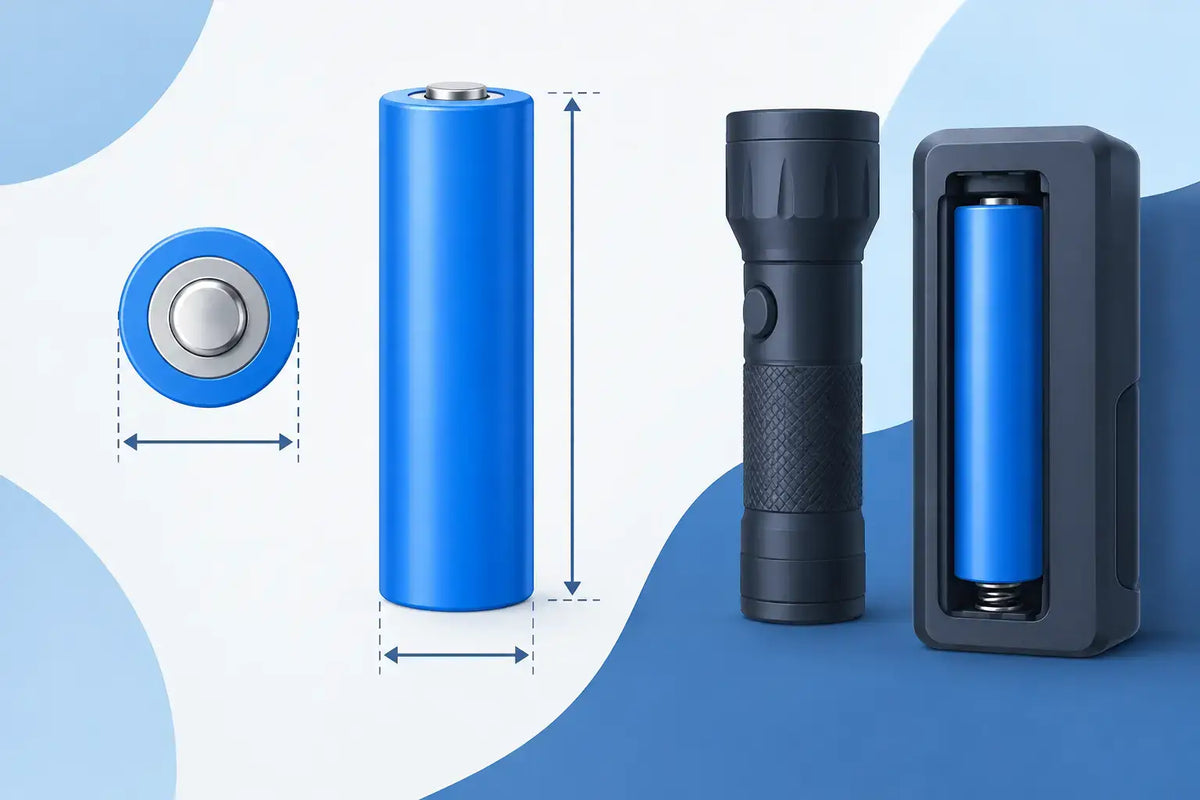
The name 21700 comes from the cell's nominal physical size: approximately 21 mm diameter and 70 mm length. The final zero identifies it as a cylindrical cell. You may also see the format written as 21 x 70 mm.
In practice, bare 21700 cells commonly measure around 21.0-21.5 mm across and about 70-71 mm long. Manufacturers publish exact dimensions for each model, and those specifications are the figures to use when clearance is tight. A high-capacity 5000mAh cell and a high-discharge 4000mAh cell may share the same format while differing slightly in diameter or length.
The format tells you the approximate physical envelope. It does not tell you the cell chemistry, capacity, continuous-discharge rating or whether the cell is protected. Those specifications must suit the application as well as the battery compartment.
21700 Battery Dimensions Guide: The Measurements to Check
For most buyers, checking only “21 x 70 mm” is not enough. Confirm the cell's diameter, overall length and terminal configuration against the device manual, the old cell and the available compartment space.
Diameter: allow for real clearance
A device designed around a 21 mm bore can be unforgiving. The cell wrapper, label and manufacturing tolerances can bring the actual outside diameter above 21 mm. Tight aluminium torch tubes, multi-cell holders and plastic sleeves are common trouble spots.
Measure the internal diameter where possible, rather than relying only on a product description. Digital callipers make this easy. If the cell slides into a tube with almost no side clearance, compare the published maximum cell diameter with the tube's usable internal diameter. Do not remove or damage the PVC wrapper to gain clearance. The wrapper is electrical insulation, not cosmetic packaging.
For battery packs, diameter affects more than whether cells fit into holders. It determines the pack's width, spacing, compression arrangement and whether fish paper rings, cell spacers and insulation sheets can be installed correctly. A pack designed for 18650 cells cannot simply be filled with 21700 cells because the larger diameter changes every row and connection layout.
Length: terminals change the result
The nominal 70 mm length usually describes an unprotected flat-top 21700 cell. Flat-top cells have a low positive terminal and are the common choice for battery packs, many high-drain devices and applications with a purpose-built battery management system.
Button-top cells add a raised positive contact. The increase is often modest, but a device with a shallow battery tube or fixed contact arrangement may not accept it. Some torches and other consumer devices need a button-top cell to bridge the positive contact, while others are made specifically for flat-top cells.
Protected 21700 cells are longer again because a protection circuit board is fitted, usually at the negative end, with a strip running to the positive end under the wrapper. Depending on the design, a protected button-top 21700 can be several millimetres longer than a standard unprotected flat-top cell. It may also be slightly wider.
This is why a 21700-compatible device may accept one cell and reject another. “Compatible with 21700” should be read as a starting point, not a complete fit specification.
Terminal style: flat-top versus button-top
Terminal style is a fit issue and an electrical contact issue. A flat-top cell may sit too low in a device that relies on a raised positive terminal. A button-top cell may be too long for a sealed battery tube or may compress a spring beyond its intended travel.
Never add coins, magnets, foil or loose metal pieces to make a flat-top cell reach a contact. They can move, short the cell or create a high-resistance connection that heats under load. Choose the correct terminal style instead.
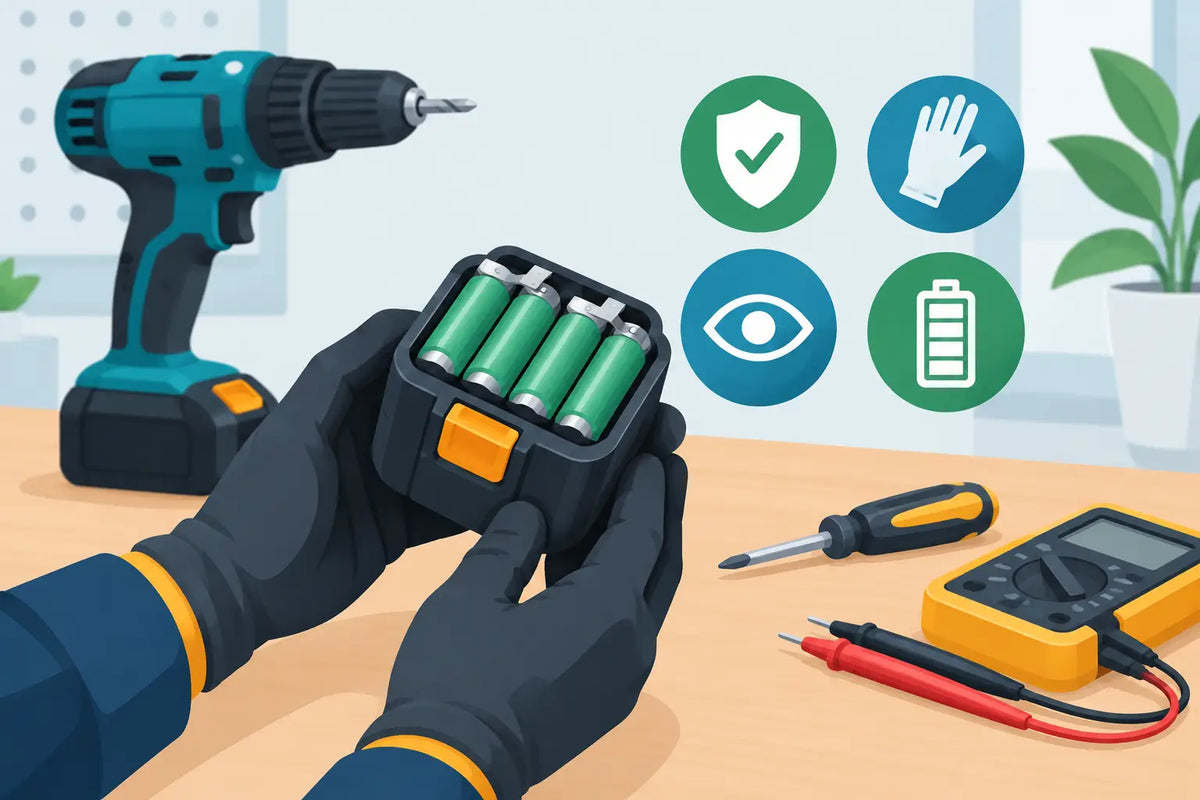
For welded packs, use suitable flat-top cells with nickel strip attached by spot welding. Soldering directly to a lithium-ion cell can overheat it and damage its internal safety components. Tabbed cells are an option where pre-attached tabs suit the pack design, but tab orientation and length must be planned before assembly.
Why 21700 Cells Do Not Always Fit 21700 Devices
A device manufacturer may use “21700” as a broad category while designing its compartment around a particular cell style. Springs, contact plates, O-rings, battery carriers and USB charging boards all take up room. Older products may also have been designed when fewer protected 21700 options were available.
Check whether the manufacturer specifies a maximum diameter and maximum length. If it lists only a recommended cell model, compare that model's dimensions and terminal type with the replacement you are considering. This is particularly useful for torches, vape devices, portable power stations and tool batteries.
Multi-cell devices deserve extra care. Even a small diameter difference can make a two- or four-cell carrier bind, and different terminal heights can create uneven spring pressure. Use matching cells from the same brand and model, ideally purchased together, when replacing a set. Do not mix an old cell with a new one, or mix capacities and discharge ratings within the same series pack.
21700 Compared With 18650 and 20700 Cells
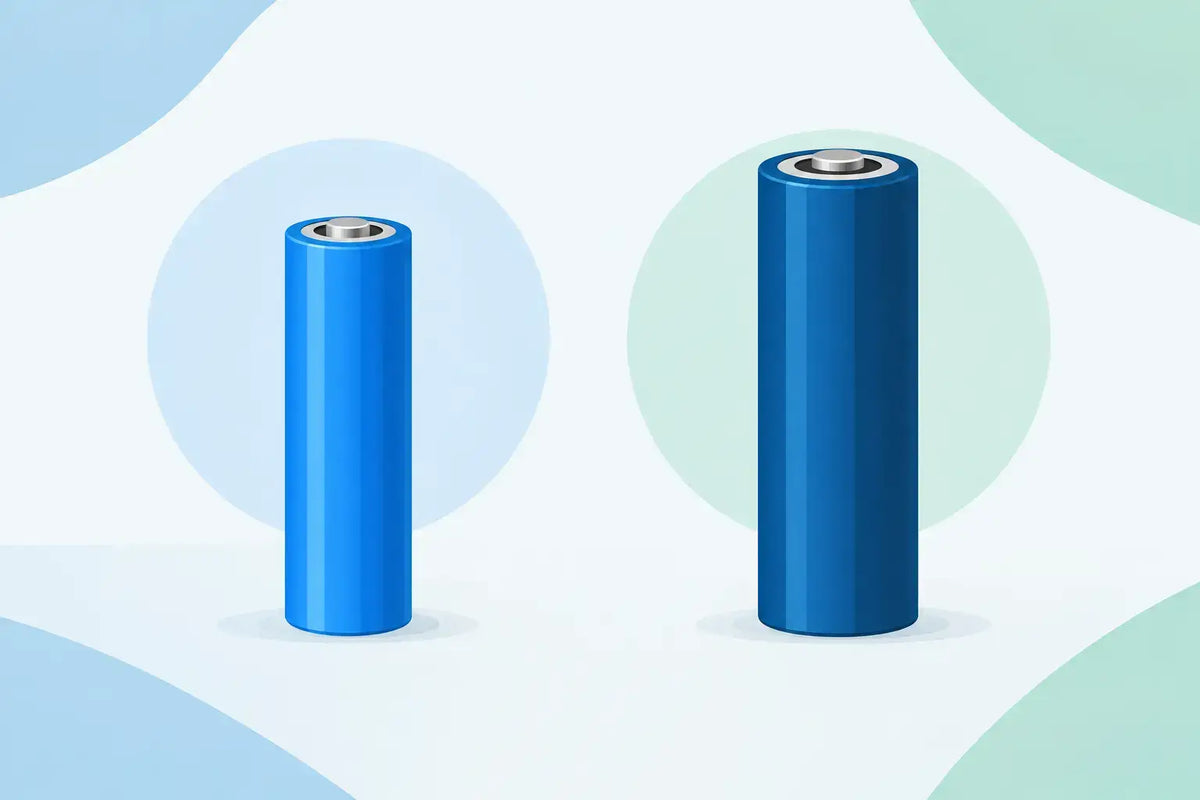
The 21700 is larger than both common alternatives. An 18650 is nominally 18 mm diameter by 65 mm long, while a 20700 is approximately 20 mm by 70 mm. The 21700 is therefore about 3 mm wider and 5 mm longer than an 18650, and about 1 mm wider than a 20700.
Those figures sound minor until you look at a battery holder or a tightly packed enclosure. A 21700 will not fit an 18650 charger slot, holder or device unless that product explicitly supports both formats. Some chargers have adjustable spring-loaded bays that accommodate 18650, 20700 and 21700 cells, but check the charger's stated supported sizes and whether protected cells fit.
The benefit of the larger format is that it can offer more capacity, more current capability or a useful balance of both. It does not automatically make a 21700 the better choice. A compact repair, low-current device or existing 18650 pack may be better served by the correct 18650 cell. Select format based on physical compatibility first, then choose capacity and continuous-discharge rating for the load.
Measuring Before You Buy
If you have the original cell, measure its body diameter and total length with callipers. Include the positive terminal but do not compress the contacts or peel back the wrapper. Note whether it is flat-top, button-top or protected, then compare it with the prospective replacement's manufacturer specification.
If you are working from a device rather than an old cell, measure the battery tube or tray at its narrowest point and check the available length between contacts. Leave sensible tolerance for insertion and removal. A cell should not need force to enter a compartment or excessive pressure to close a battery cap.
For a custom pack, draw the cell layout before ordering. Account for cell holders or spacers, nickel strip, BMS wiring, fish paper insulation, heatshrink and the enclosure wall thickness. The finished pack is always larger than the cells alone. Also check that the selected BMS and nickel strip are rated for the intended continuous current, especially with high-drain 21700 cells.
A Practical Fit Checklist
Before selecting a 21700 cell, confirm the device accepts 21700 cells, then verify the maximum cell diameter, maximum overall length and required terminal type. Check whether the device has its own low-voltage protection and whether it requires a protected cell. Finally, match the cell's continuous-discharge rating to the actual load rather than choosing on mAh alone.
A correctly sized cell should install without forcing, make reliable contact and leave the wrapper intact. That small amount of checking prevents most fitment mistakes and gives your project a safer, cleaner starting point.